
Best use of wood in modern designs (guide for 2026)
Modern designs utilize wood to add warmth and organic texture, focusing on sustainable sourcing, sleek minimalism, and multifunctional applications. Top trends include slatted acoustic paneling, integrated cabinetry, natural-toned kitchen islands, and raw edge furniture, bridging the gap between cozy, natural aesthetics and contemporary, clean-lined spaces.
Key applications of wood in modern design include:
-
Accents: Small, impactful uses of wood, such as decorative items, floating shelves, and door frames provide a touch of nature without overwhelming the space.
-
Wall Paneling & Accent Walls: Vertical wood slats and panels are used to create textured, focal walls that add warmth, depth, and a sense of luxury.
-
Modern Kitchens: Beyond cabinetry, wood is used for kitchen islands, contrasting with stone countertops to create a welcoming, functional, and stylish space.
-
Furniture & Statement Pieces: Modern furniture trends emphasize simplicity, using light, neutral wood tones like ash for a Scandi-inspired look that creates a calm, tranquil, and airy feel.
-
Ceilings & Structural Elements: Exposed timber beams or paneling on ceilings are used to add architectural detail, dimension, and a contemporary feel to modern homes.
-
Built-in Storage & Dividers: Custom, integrated shelving and cabinets are used to create cohesive, clutter-free, and functional spaces, including using wood to define zones in open-plan homes.
In this article, we explore the best use of wood in modern designs and how natural materials can enhance contemporary interiors while maintaining functionality and visual balance.
Best use of wood in modern designs

Wood has become one of the most important materials in contemporary interiors because it adds warmth, texture, and visual balance to clean architectural spaces. When used thoughtfully, wooden elements help modern environments feel more natural, comfortable, and timeless. From large architectural features to small decorative pieces, wood connects minimal design with organic beauty.
Accents
Small wooden accents can significantly influence the atmosphere of a modern interior without dominating the space. Decorative objects, floating shelves, door frames, and handcrafted tabletop pieces introduce subtle natural texture that softens modern materials like glass, steel, and stone. Even compact décor items such as engraved signs, wooden menu displays, or QR stands can elevate tables, counters, and reception areas by adding warmth and visual detail.
Wall paneling and accent walls
Vertical wood slats and textured panels are widely used in modern interiors to create elegant feature walls. These panels add depth and architectural rhythm while improving acoustics in open spaces. In restaurants, cafés, and offices, wooden wall installations are often complemented by small design elements like engraved signs or wooden displays that reinforce the natural material palette.
Modern kitchens
In modern kitchens, wood is often used to create contrast against stone countertops, metal fixtures, and minimalist cabinetry. Natural wood islands or panel-front cabinets introduce warmth while keeping the space visually balanced. Decorative wooden items placed on counters, serving areas, or dining tables help continue the material theme and create a cohesive interior experience.
Furniture and statement pieces
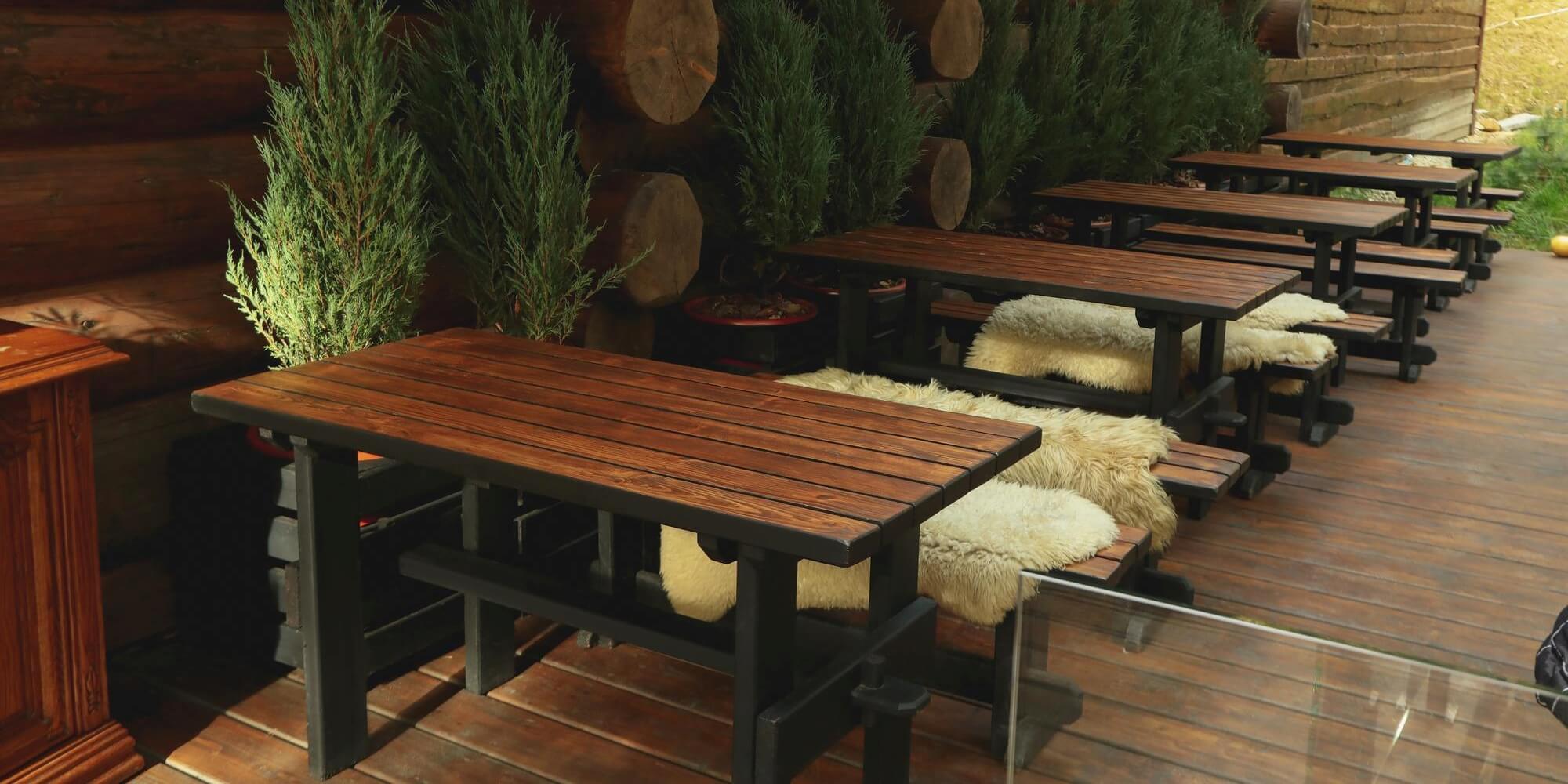
Modern furniture frequently highlights the natural beauty of wood through simple forms and neutral finishes. Light woods such as ash, oak, or birch are commonly used to create Scandinavian-inspired furniture that feels calm, airy, and refined. Statement pieces like dining tables, benches, and handcrafted wooden décor items add personality while maintaining the simplicity that defines contemporary design.
Ceilings and structural elements
Wooden ceilings and exposed beams add architectural interest while visually warming large interior spaces. Paneling or timber beams create dimension and rhythm that complement minimalist design styles. When paired with smaller wooden details such as decorative displays, these structural features help maintain a consistent and harmonious design language throughout the space.
Built-in storage and dividers
Custom wooden shelving, cabinets, and partitions play an important role in modern layouts by organizing space while preserving visual openness. Built-in wood structures can divide open-plan interiors into functional zones without blocking light or airflow. Complementing these larger elements with smaller handcrafted wooden décor pieces helps reinforce the natural aesthetic and creates a cohesive, thoughtfully designed environment.
Types of wood used in interior design

Wood species play an important role in interior design because each type offers different colors, grain patterns, durability, and aesthetic qualities. Designers choose specific woods based on the atmosphere they want to create, whether the goal is warmth, elegance, minimalism, or rustic character. Understanding the most commonly used wood types helps create balanced interiors where architectural elements, furniture, and decorative pieces work together harmoniously.
Oak
Oak is one of the most widely used woods in interior design due to its strength, durability, and distinctive grain pattern. It is commonly used for flooring, cabinetry, furniture, and architectural details because it withstands daily wear while maintaining a refined appearance. Light oak varieties are especially popular in modern and Scandinavian interiors, while darker finishes create a more traditional or luxurious atmosphere.
Walnut
Walnut is valued for its rich brown color and smooth, elegant grain that adds depth and sophistication to interiors. It is often used for high-end furniture, wall paneling, and statement pieces that need a refined visual presence. Because of its natural beauty, walnut is also ideal for smaller decorative elements such as wooden signage, engraved décor pieces, or tabletop accessories that introduce warmth without overwhelming the space.
Maple
Maple is known for its light color, smooth texture, and subtle grain pattern, making it ideal for minimalist and contemporary interiors. It is frequently used for cabinetry, flooring, and furniture where a clean and bright appearance is desired. Designers often pair maple surfaces with simple wooden décor items and functional design pieces to maintain a cohesive and balanced interior style.
Ash
Ash is a durable hardwood with a light tone and visible grain that works well in modern furniture design. It is often associated with Scandinavian-inspired interiors because it creates an airy and calm atmosphere. Ash is commonly used for chairs, tables, shelving, and architectural details that emphasize natural materials while keeping spaces visually light.
Birch
Birch is a versatile wood that offers a pale color and smooth surface, making it suitable for contemporary interiors and modern furniture. It is often used for plywood panels, cabinets, and minimalist design elements because it provides strength while maintaining a clean aesthetic. Birch also works well for decorative wooden accessories and custom-made design pieces that complement natural interior palettes.
Teak
Teak is a highly durable wood known for its natural oils and resistance to moisture, which makes it ideal for both interior and semi-outdoor spaces. Its warm golden-brown color and smooth grain create a luxurious appearance in furniture, paneling, and architectural accents. Teak is often chosen for statement furniture pieces as well as premium decorative elements that combine durability with timeless elegance.
Wood decoration ideas for businesses

Wooden décor elements are widely used in modern interiors because they add warmth, texture, and natural character to a space. Unlike large structural features, decorative wooden items allow designers to introduce natural materials through smaller details that still make a strong visual impact.
QR codes
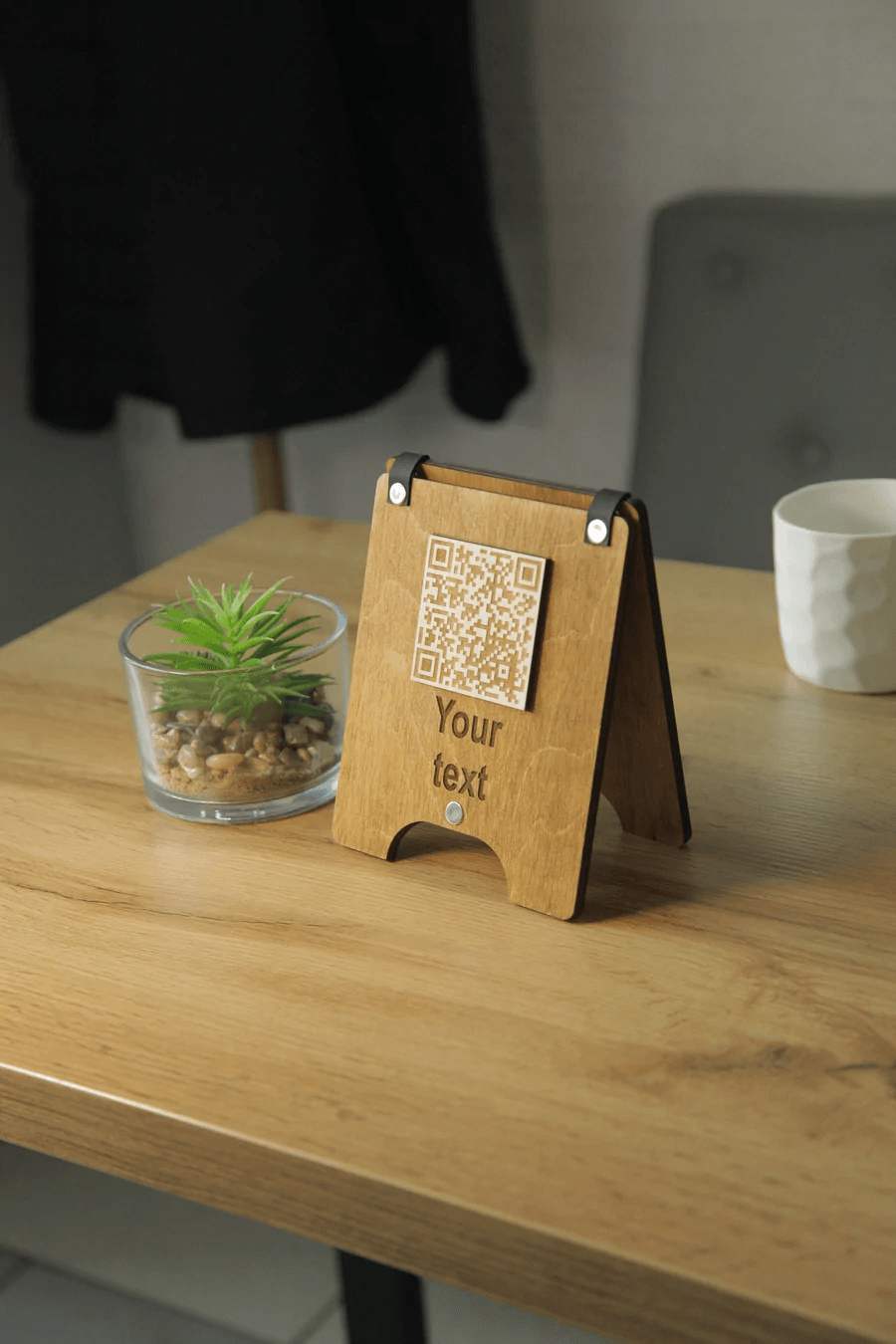
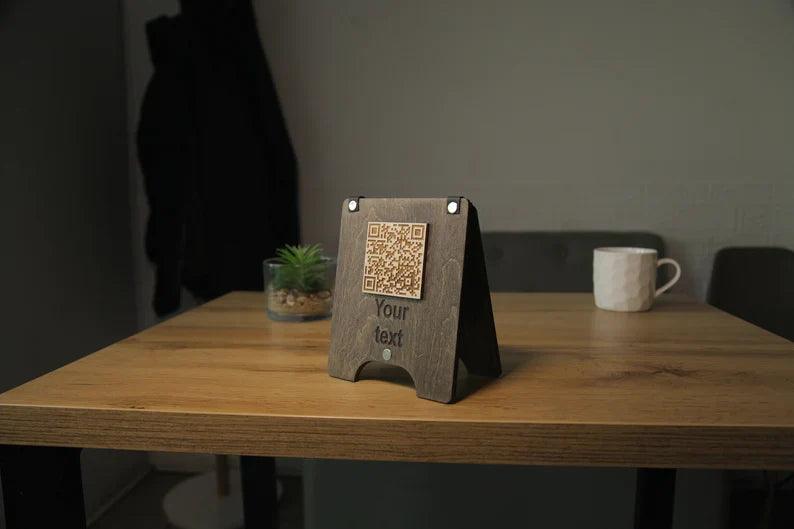
Wooden QR code signs provide a modern solution for displaying digital menus, payment links, or feedback forms. When placed on tables, these compact wooden stands allow guests to quickly access information while maintaining a natural and visually pleasing table setup. Their handcrafted appearance integrates technology into the space without disrupting the warm interior atmosphere.
Wall menu letter boards
Wall-mounted wooden letter boards are popular for displaying menus, announcements, or daily messages. Their modular design allows staff to easily update content while maintaining a clean and structured appearance. Wooden frames also add warmth to the wall and create a focal point that complements other natural design elements in the space.
Table signs
Wooden table signs are often used for table numbers, special messages, or informational displays. Their natural texture and simple form make them suitable for both modern and rustic interiors. By replacing plastic or laminated signage with wood, restaurants can create a more cohesive and thoughtful visual environment.
Reserved table signs
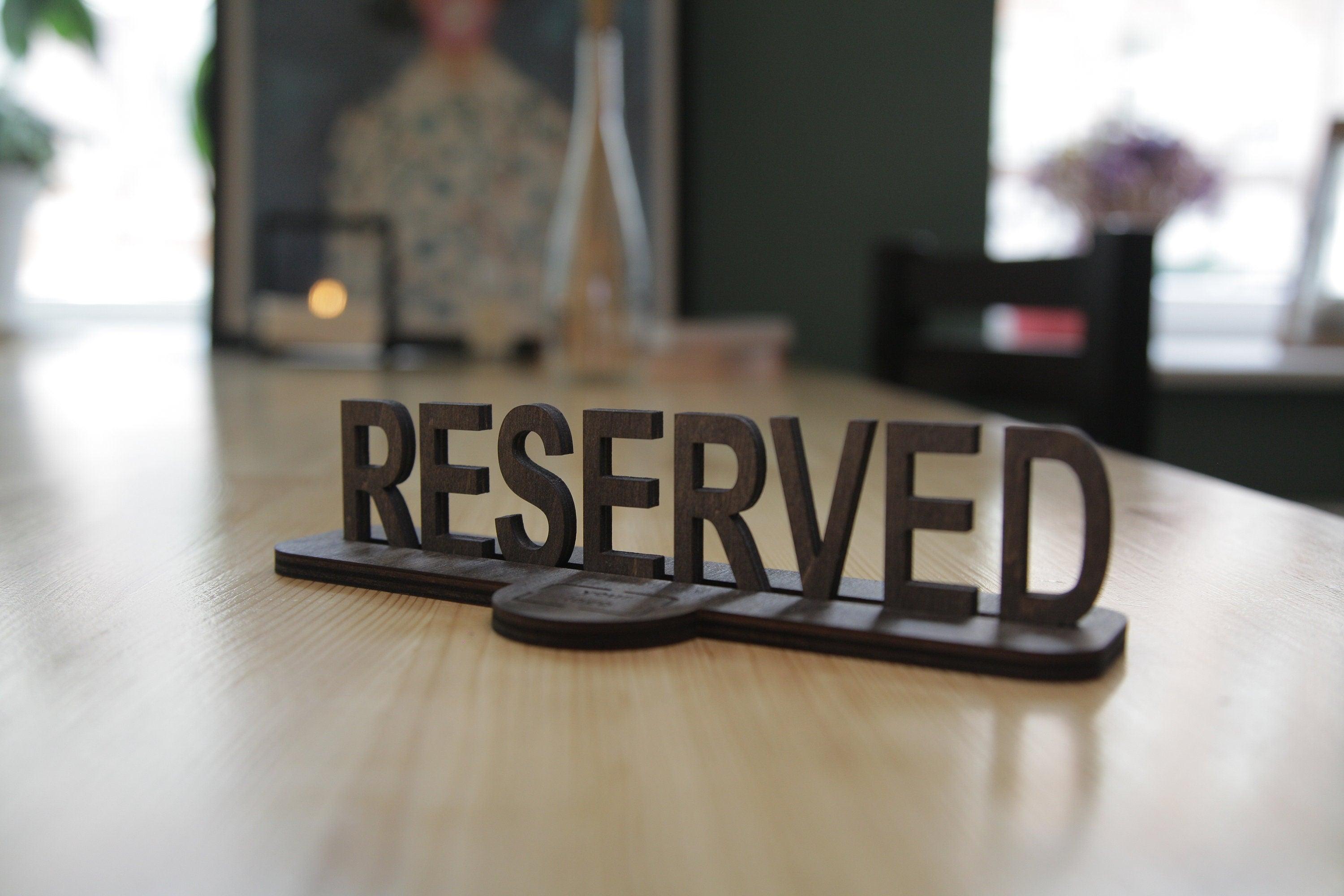
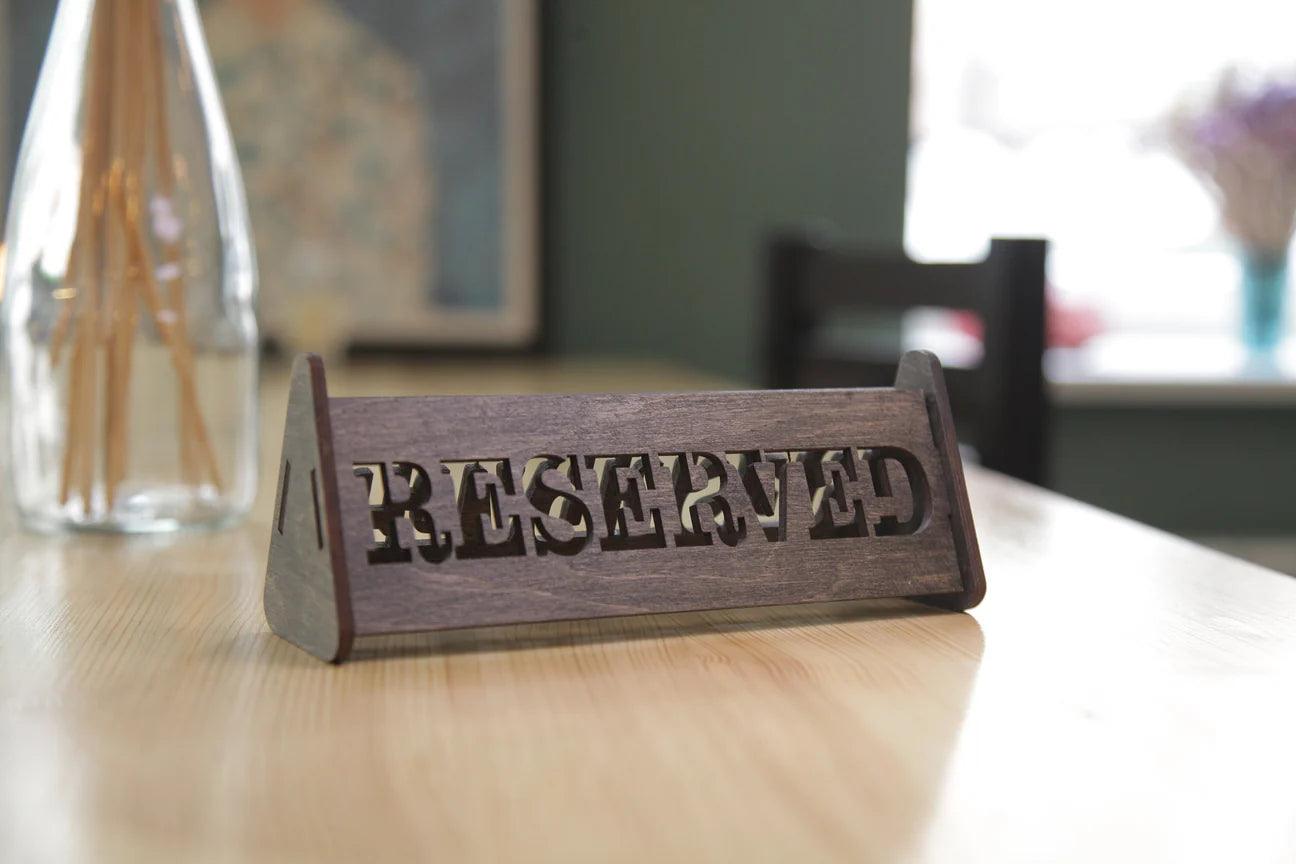
Reserved table signs made from wood help restaurants communicate table availability in a stylish and professional way. Instead of using paper or plastic signs, wooden reserved signs create a polished appearance that aligns with modern interior aesthetics. They also function as decorative tabletop elements that subtly reinforce the restaurant’s overall design concept.
Menu boards
Wooden menu boards are commonly used in cafés, bakeries, and casual dining spaces to display daily specials or full menus. Their solid wooden frames create a clear focal point that draws attention while fitting naturally into modern or rustic interiors. These boards also provide flexibility, allowing restaurants to update menu items easily while keeping the presentation stylish and consistent.
Wooden menu covers
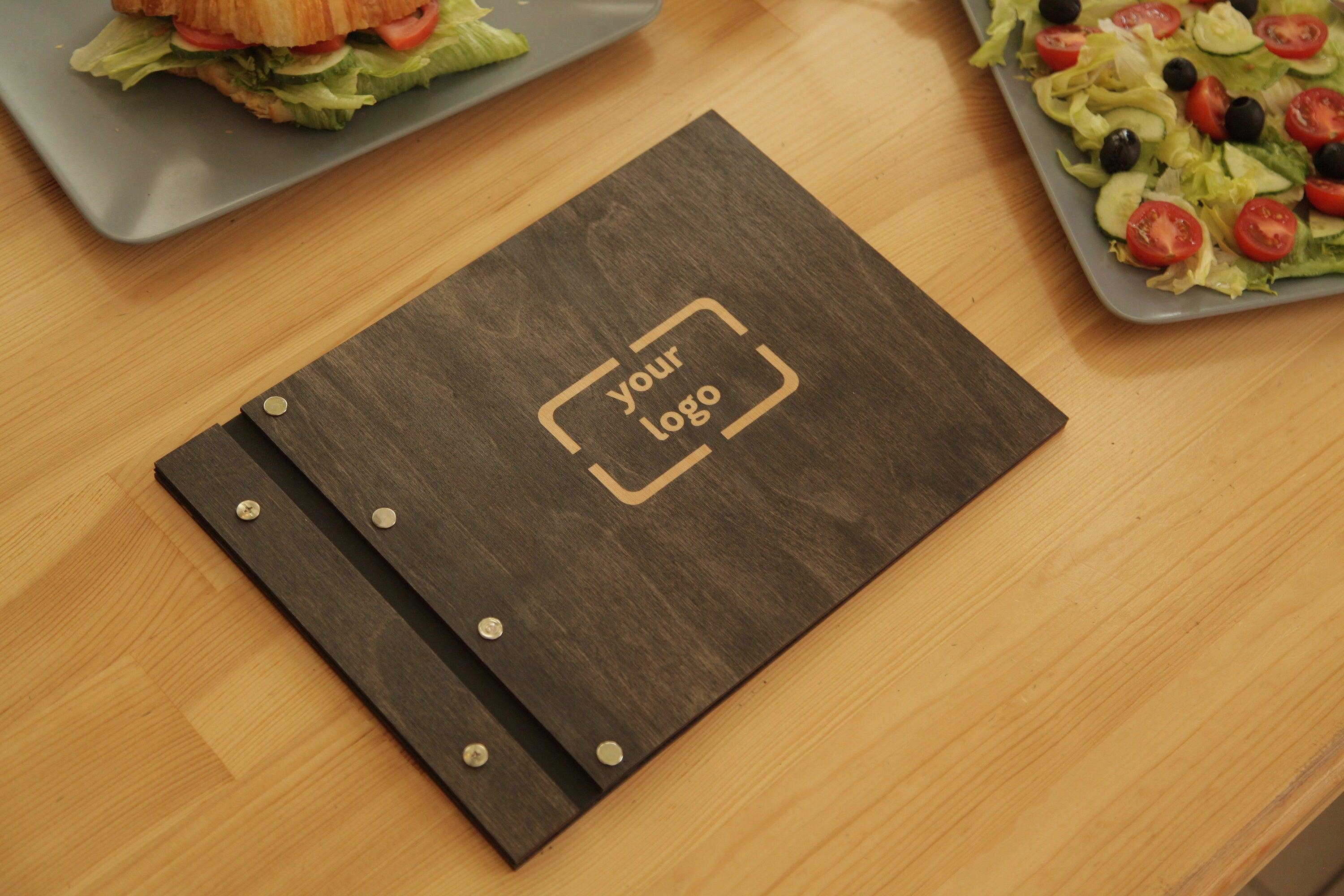
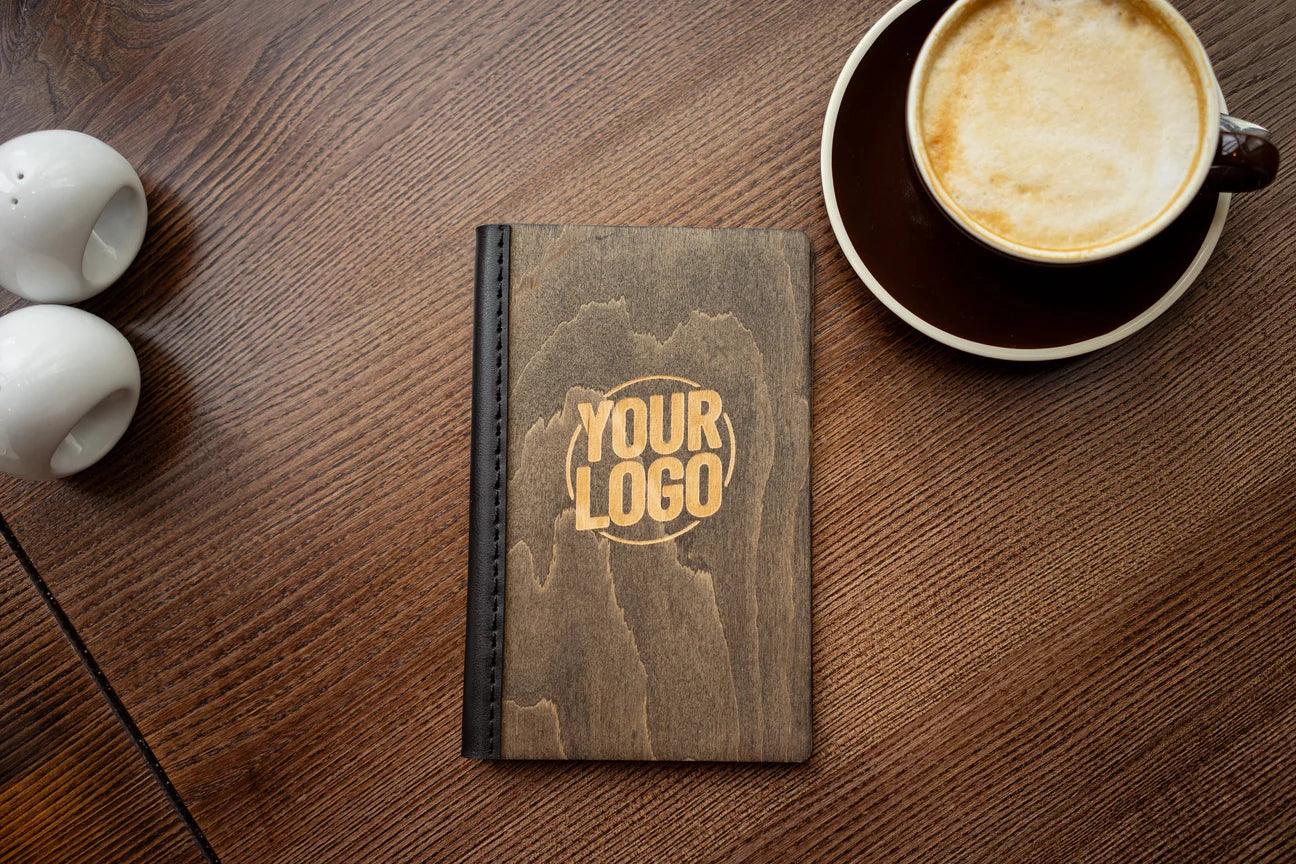
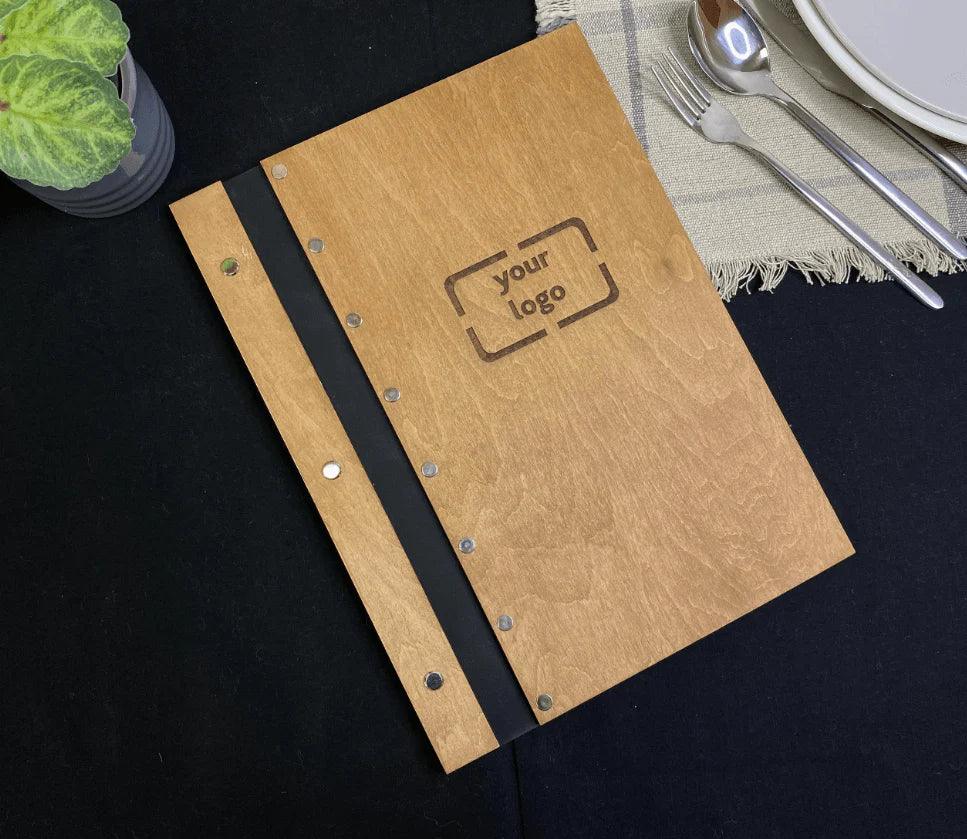
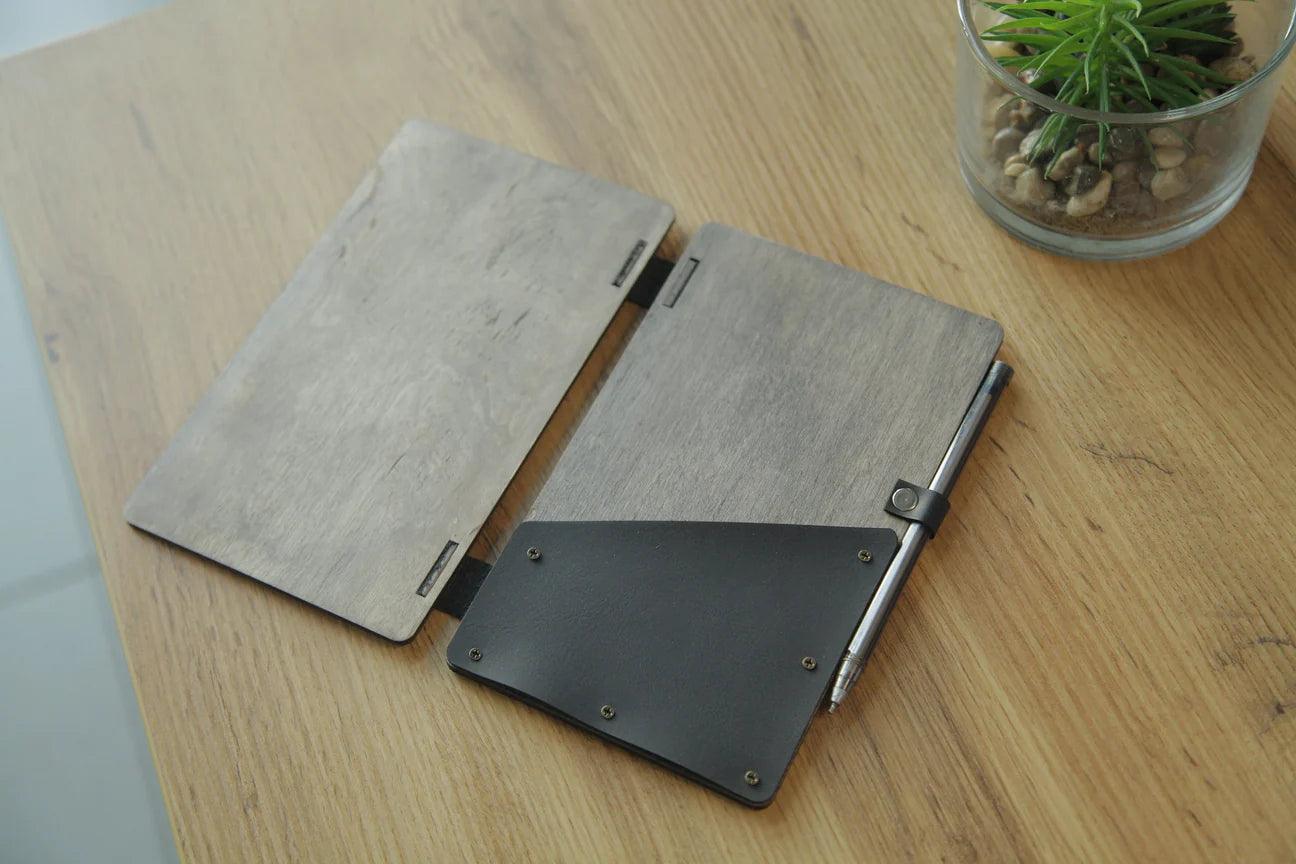
Custom wooden menu covers help present menus in a way that feels elegant, durable, and memorable. The natural texture of wood immediately adds warmth to restaurant tables while protecting printed menus from frequent handling. Engraved logos, custom finishes, and carefully crafted details allow these menu covers to reinforce brand identity while complementing the overall interior design.
Check presenters
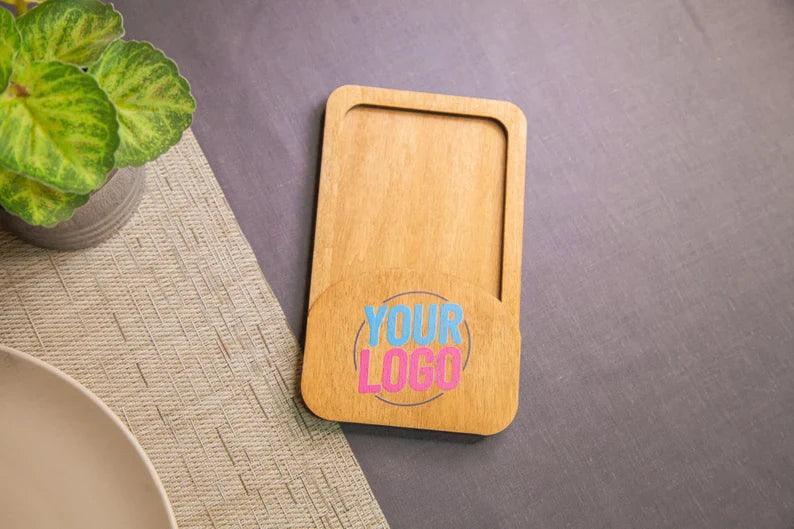
Custom check presenters are small yet important décor elements that influence the final stage of the dining experience. Wooden check presenters add a refined and natural touch to the table while keeping receipts and payment details organized. Their solid construction also ensures durability in busy restaurant environments where items are used many times throughout the day.
Wooden business signage
Wooden business signs are commonly used in storefronts, offices, and reception areas to display company names or directional information. Engraved or carved lettering creates a professional and memorable appearance compared with printed signs. Because wood ages naturally and develops character over time, these signs often become long-lasting branding elements.
Reception desk décor
Reception areas often benefit from wooden decorative elements such as engraved welcome signs, tabletop displays, or small wooden stands for brochures and business cards. These details help create a warm first impression for visitors and clients. The natural material softens modern interiors that might otherwise feel overly minimal or corporate.
Wooden brand displays
Wooden display pieces can highlight logos, product names, or promotional messages inside retail stores or hospitality venues. These engraved or carved displays function as subtle branding elements that reinforce the identity of the business. Their natural aesthetic works particularly well in modern interiors that emphasize sustainable materials.
Wooden decorative accents
Beyond functional signage and displays, businesses often use wooden decorative accents to enhance their interior atmosphere. Items such as engraved wall art, wooden frames, small sculptures, or decorative trays can introduce natural warmth into otherwise minimalist spaces. These subtle details help create an inviting environment that encourages customers to stay longer and enjoy the space.
How to choose the best wood for lasting decor

For decorative elements that need to last, it is essential to consider factors such as wood hardness, grain quality, finish, and the environment where the item will be used. Well-chosen wood not only improves the visual quality of a space but also ensures that decorative pieces remain beautiful and functional for many years.
Consider durability and hardness
The durability of wood is one of the most important factors when selecting décor items that will be used frequently. Hardwoods such as oak, walnut, and maple are strong and resistant to wear, making them ideal for furniture, signage, and tabletop accessories. These woods maintain their structure even with constant handling, which is important for items like menu covers, table signs, or display stands.
Evaluate grain pattern and color
The grain pattern and color of wood strongly influence the visual style of a décor piece. Woods with pronounced grain, such as oak or ash, add texture and character to interiors, while smoother woods like maple provide a cleaner and more minimalist look. Choosing a wood tone that complements the rest of the interior helps create a balanced and cohesive design.
Check the quality of finishing
A proper finish protects wood from moisture, stains, and scratches. High-quality finishes such as natural oils, wax, or protective coatings help preserve the natural texture of the wood while increasing durability. This is especially important for décor items used on tables, counters, or reception desks where surfaces may come into frequent contact with liquids or cleaning products.
Think about the environment
The location where the décor item will be placed also influences the type of wood that should be used. For humid environments such as kitchens or outdoor patios, moisture-resistant woods like teak are often preferred. In indoor spaces with stable temperature and humidity, a wider range of hardwoods can be used safely for decorative elements.
Choose craftsmanship and construction
Even the best wood will not perform well if the craftsmanship is poor. Carefully crafted wooden décor items with smooth edges, precise engraving, and solid construction tend to last much longer. Quality craftsmanship ensures that wooden decorative pieces remain stable, visually appealing, and reliable even after years of regular use.
Main wood design trends

Designers increasingly combine natural wood with minimalist architecture, modern materials, and sustainable practices. As a result, several clear trends have emerged that show how wood is being used creatively in homes, offices, restaurants, and retail environments.
Biophilic design
Biophilic design focuses on strengthening the connection between people and nature inside built environments. Natural wood surfaces, furniture, and decorative elements help create calming spaces that support comfort and well-being. Many workplaces, hotels, and homes now incorporate wooden wall panels, shelving, and decorative objects to bring natural textures into everyday environments.
Sustainability and eco-conscious materials
Sustainability has become one of the strongest drivers behind the increased use of wood in modern interiors. Designers and architects often choose responsibly sourced timber because it is renewable, durable, and environmentally friendly. Using long-lasting wooden décor pieces and furniture also reduces waste and supports more sustainable design practices.
Light and dark wood contrast
Interior designers increasingly use both light and dark wood tones to create visual contrast. Light woods such as oak, ash, and maple help make interiors feel bright, calm, and spacious. Darker woods like walnut introduce depth and sophistication, often appearing in statement furniture, wall accents, or decorative accessories.
Texture pairing with modern materials
Wood is frequently combined with materials such as steel, glass, stone, and concrete to create balanced contemporary interiors. The natural texture of wood softens the harder surfaces of industrial materials, resulting in spaces that feel modern but still warm. This contrast is especially popular in cafés, offices, and urban residential interiors.
Minimalist wooden décor
Minimalism has influenced how wood is used in decorative elements. Instead of large ornamental pieces, designers often incorporate smaller handcrafted wooden items such as signage, tabletop accessories, display stands, or wall décor. These subtle details introduce natural materials while maintaining clean, uncluttered interiors.
Custom wooden branding elements
Businesses increasingly use custom wooden design pieces to strengthen brand identity within their interiors. Engraved signage, wooden menu boards, branded displays, and tabletop décor allow companies to incorporate their visual identity into the physical space. These elements help create memorable environments that feel cohesive and thoughtfully designed.
Natural grain as a design feature
Rather than hiding wood grain with heavy finishes, modern interiors often highlight the natural patterns of the material. Visible grain adds texture, depth, and individuality to surfaces such as furniture, wall panels, and decorative objects. This trend emphasizes authenticity and celebrates the natural character of wood.
Modular wooden décor and displays
Modular wooden décor pieces are becoming increasingly popular in both retail and hospitality spaces. Changeable letter boards, adjustable display stands, and flexible signage systems allow businesses to update messages or promotions easily. These adaptable wooden elements combine practicality with aesthetic appeal.
Custom wooden decor items from KyivWorkshop

Whether you are redesigning your interior or strengthening your brand identity, KyivWorkshop provides handcrafted wooden décor that adds character to your space.
From elegant menu covers and reserved table signs to QR code stands and other custom wooden pieces, each product is made to complement your concept.
Explore a collection of our customizable decor items and transform your space with distinctive design elements that leave a lasting impression.
FAQs
What is the best wood for interior design?
The best wood for interior design is usually durable hardwood such as oak, walnut, maple, or ash. These species work well for wooden floors, cabinetry, and wooden furniture because they are strong and long lasting. They also provide warm tones that fit many modern and classic interiors. Because wood is a versatile material, designers use it in everything from structural features to decorative accents.
What is a fancy wood type?
A fancy wood type is usually a rare hardwood known for its distinctive color or grain pattern. Woods such as ebony, mahogany, and walnut are valued because of their unique grain patterns and deep natural color. These materials often appear in luxury furniture and finely crafted décor pieces. Their rarity and refined look give them a timeless elegance that many interior designers appreciate.
What is the prettiest wood?
Many people consider walnut or cherry to be among the prettiest woods because of their rich color and smooth texture. These woods develop a beautiful natural patina over time that enhances their appearance. Their balanced grain patterns create strong visual interest in furniture and decorative surfaces. This natural beauty gives wood a timeless quality in interior spaces.
What wood is used for luxury items?
Luxury furniture and decorative objects are often made from hardwoods such as walnut, mahogany, rosewood, and teak. These woods are valued for their strength, fine grain, and ability to achieve a smooth refined finish. They are commonly used in premium furniture, cabinetry, and detailed architectural elements. Their durability and appearance help create interiors that feel sophisticated and long lasting.
What is the most elegant wood?
Walnut is widely considered one of the most elegant woods used in interior design. Its deep color and smooth grain create a refined appearance that works well in upscale interiors. Designers often choose walnut for furniture, wall accents, and decorative objects that add character to a room. The result is a sophisticated look with timeless appeal.
Which wood is premium?
Premium woods usually include walnut, teak, mahogany, and rosewood because they are durable and visually distinctive. These species often feature unique characteristics such as complex grain patterns or deep natural color. Because of their durability, they are frequently used in high-quality furniture and detailed interior finishes. Their long history in craftsmanship gives them a rich history in design traditions.
What are the main luxury wood types?
Luxury wood types commonly include mahogany, teak, rosewood, walnut, and ebony. These species are valued for their density, strength, and refined appearance. They are frequently used in premium furniture, cabinetry, and decorative surfaces in living spaces. Their quality and appearance give interiors a sense of timeless elegance.
What is the best looking wood?
The best looking wood often depends on personal preference and interior style. Some people prefer light woods such as maple or ash because their light color creates a bright and modern appearance. Others prefer darker species such as walnut that create a dramatic effect in a room. In both cases, the beauty of wood comes from its natural grain and organic variation.
What are the trends in wooden design now?
Current trends show designers using wood to create natural, calming interiors that balance modern architecture with organic textures. Many interiors now include wood paneling, statement walls, and furniture that add texture while maintaining clean design. Another trend is combining wood with other materials such as steel, glass, or stone to create contrast. These approaches reflect a growing interest in natural materials and sustainable design choices.
What are the main types of decorative wood?
Decorative wood types include hardwood species like oak, walnut, maple, and cherry. These woods are frequently used in decorative panels, wall accents, and furniture. Designers also use reclaimed wood to introduce history and texture into interiors. Each type of wood contributes to the overall aesthetic of a space in a different way.
How to identify wood?
Wood can often be identified by examining the grain pattern, color, and texture. Each species shows distinctive marks that appear in its natural state. Some woods also show natural imperfections such as knots or variations in tone. These details help craftsmen and designers recognize different wood types.
Which types of wood are best for decor?
Hardwoods such as oak, walnut, maple, and cherry are often best for decorative use. They are durable and develop attractive wood finishes that highlight their grain patterns. These woods are commonly used in furniture, wall décor, and design features that add texture to interiors. Their natural appearance helps create warmth and character in many styles of spaces.
How to identify different types of wood?
Different wood species can be identified by examining grain structure, color variation, and hardness. Oak, for example, has a strong grain pattern, while maple has a smoother appearance. Looking closely at the unique grain patterns can help determine the species. Professionals may also examine density and surface texture to confirm identification.
Which is better: plywood or engineered wood?
Plywood and engineered wood serve different purposes depending on the project. Plywood is known for strength and stability, which makes it useful for furniture and cabinetry in high traffic areas. Engineered wood products often provide consistent performance and lower cost. Both materials are widely used in commercial spaces and residential construction.
What is the best wood for outdoor decorations?
Teak, cedar, and redwood are among the best woods for outdoor décor because they naturally resist moisture and insects. These woods maintain durability even when exposed to weather conditions. Their natural oils and density help protect surfaces without heavy treatment. This resilience helps reduce the environmental impact by allowing outdoor wooden elements to last longer.
What role does wood play in modern interior design?
Wood plays a central role in modern interior design by balancing minimal architecture with natural textures. Many interiors incorporate architectural elements such as beams, panels, or shelving made from wood. These features soften contemporary spaces and prevent them from feeling sterile. Designers value wood because wood brings warmth and comfort to modern interiors.
How can wood be used as decorative elements in a home or business space?
Wood can appear in furniture, signage, wall panels, and decorative accessories. Small accents such as engraved signs or display stands can introduce natural textures into interiors. These pieces are often created as custom wood pieces that match the brand or design concept. Such details help strengthen a cohesive design throughout the space.
Why is wood popular in modern interior design?
Wood remains popular because it is durable, adaptable, and visually appealing. It can be used for flooring, furniture, walls, and decorative accents. The material works well with minimalist interiors because it complements clean lines and simple layouts. Designers appreciate it because it offers a timeless quality that fits many interior styles.
How do designers highlight the natural beauty of wood in interiors?
Designers often emphasize the natural surface of wood rather than covering it completely. They select finishes that reveal grain patterns and subtle color variation. This approach allows the material to stand out among other materials such as metal or stone. The result highlights the organic beauty that makes wood so valued in design.
How is wood used in a contemporary interior?
In a contemporary home, wood appears in furniture, floors, wall panels, and shelving. Designers frequently combine it with glass, steel, or concrete to create contrast. The material introduces organic textures that soften minimalist architecture. This balance helps interiors feel modern while still connected to natural elements.
What are the current interior design trends involving wood?
Current trends show designers using wood to create natural, calming interiors. Many spaces feature large surfaces such as statement walls or wooden ceilings. These features add depth and structure to rooms without excessive decoration. Such ideas reflect evolving interior design trends focused on sustainability and natural materials.
How does wood improve the aesthetic appeal of a room?
Wood improves a room by introducing natural texture and organic patterns. These features create depth and visual balance in modern interiors. When paired with neutral surfaces, wood elements can dramatically enhance the aesthetic appeal of a space. Designers often use it because wood adds warmth and natural contrast.
How can wood be used to decorate a dining room?
Wood is commonly used in the dining room through tables, chairs, shelving, and decorative wall elements. Wooden furniture creates a comfortable space where people gather to eat and socialize. Wall panels, frames, or shelves can further enhance the environment. These elements help create an inviting atmosphere for meals and conversation.
Why is wood important in modern design?
Wood is important in modern design because it balances sleek architecture with natural warmth. It can appear in structural details, furniture, and decorative accents. Designers often combine it with stone or metal to create contrast and depth. This flexibility makes wood an essential material in contemporary style.
How does wood support biophilic design principles in interior spaces?
Biophilic design encourages a connection between indoor environments and nature. Wood helps achieve this goal because it reflects natural textures and organic forms. When used in interiors, it creates spaces that feel calm and comfortable. This approach aligns closely with biophilic design principles and the use of natural materials.
How can wood help create a warm and inviting atmosphere in a room?
Wood surfaces naturally create warmth through their color, grain, and texture. When placed in floors, furniture, or wall accents, they soften modern interiors. Designers often use wood in gathering areas to make rooms feel more comfortable. This effect helps produce an inviting atmosphere and a sense of warmth and character in the space.