


Best menu pricing strategies that boost sales (2026)
Effective menu pricing strategies combine cost analysis, psychological tactics, and market positioning to maximize profitability. Key approaches include cost-plus pricing (ensuring margins), value-based pricing (based on customer perception), and menu engineering (highlighting high-profit items). Common tactics include decoy pricing, bundling, and dynamic pricing.
Core menu pricing strategies include:
-
Cost-plus/food cost percentage pricing: Calculates the cost of ingredients (and sometimes labor) and applies a multiplier (e.g., aiming for a 28–35% food cost) to determine the price.
-
Value-based pricing: Sets prices based on the perceived value to the customer rather than just the cost, often used for unique or high-quality dishes.
-
Competitive pricing: Analyzes competitor prices for similar items to set a baseline, ensuring the restaurant remains competitive in the local market.
-
Menu engineering: A data-driven approach that categorizes items into "stars" (high profit, high popularity) and "dogs" (low profit, low popularity) to optimize layout and pricing.
-
Price skimming: Introducing new items at a higher price point to maximize profit from early adopters before potentially lowering them.
-
Penetration pricing: Setting low prices initially to attract a large customer base and gain market share.
At KyivWorkshop, we have spent years crafting customizable menu covers designed to help businesses grow their revenue. In this guide, we’ll explore some of the best menu pricing strategies.
Main restaurant menu pricing strategies

Choosing the right pricing strategy is one of the most important decisions for a restaurant, as it directly affects profitability, positioning, and customer perception. In practice, successful restaurant owners often combine several pricing methods rather than relying on just one. Below are the core strategies used across the industry.
Cost-plus / food cost percentage pricing
This strategy calculates the total cost of ingredients (and sometimes labor) and applies a markup to reach a target food cost percentage, usually around 28–35%. It gives restaurant owners a clear and controlled way to protect margins, especially in traditional restaurant models. While it ensures profitability per dish, it may ignore how customers actually perceive value. It works best when combined with other strategies that consider demand and positioning.
Value-based pricing
Value-based pricing focuses on what customers are willing to pay rather than just the cost of making the dish. It is commonly used for signature items, premium ingredients, or unique dining experiences where perception matters more than raw cost. This approach allows higher margins but requires a strong brand and clear differentiation. When done well, it enhances customer satisfaction because guests feel the experience matches the price.
Competitive pricing
Competitive pricing looks at similar restaurants in the area and sets prices within a comparable range. It helps maintain market relevance and prevents overpricing or underpricing in a crowded segment. This strategy is especially useful in areas with many similar concepts or for new restaurants entering the market. However, relying only on competitors can limit profitability and brand positioning.
Menu engineering
Menu engineering is a data-driven approach that analyzes both profitability and popularity of menu items. Dishes are categorized into groups like “stars” (high profit, high demand) and “dogs” (low profit, low demand), helping optimize placement and pricing. This method improves overall revenue without changing the entire menu. It is one of the most effective ways to align pricing with actual customer behavior.
Price skimming
Price skimming involves launching new or exclusive dishes at a higher price to maximize revenue from early adopters. Over time, the price may be reduced to attract a broader audience. This strategy works well for limited-time offers, chef specials, or trend-driven items. It helps capture maximum value during peak interest periods.
Penetration pricing
Penetration pricing sets lower initial prices to attract customers quickly and build market share. It is often used by new restaurants or when launching a new concept or menu category. Once a loyal customer base is established, prices can be gradually adjusted. This approach prioritizes traffic and visibility over short-term profit.
Psychological and tactical menu pricing strategies that influence customer decisions

Pricing is not only about covering costs or matching competitors, it also shapes how customers perceive value and make choices. Psychological and tactical pricing techniques use subtle cues to guide attention, increase average spend, and make certain items feel more attractive. Below are the most effective techniques used in modern menu design.
Decoy pricing
Decoy pricing places a very expensive item on the menu to make other high-margin dishes look more reasonable by comparison. This creates a contrast effect where customers naturally gravitate toward the “middle” option. It is especially effective for steering attention to profitable items you want to sell more often. The key is to design the menu layout so the comparison feels natural, not forced.
Charm pricing
Charm pricing uses prices ending in .99 or .95 to make items appear more affordable at a glance. Even a small difference in perception can influence decision-making, especially in casual dining environments. This technique works because customers tend to focus on the first digits rather than the full price. However, for premium or fine dining concepts, rounded pricing may feel more aligned with the brand.
Bundle pricing
Bundle pricing combines multiple items into a set, such as a value meal or prix fixe menu, encouraging customers to spend more overall. It simplifies decision-making and increases perceived value, which often leads to higher average checks. This strategy is widely used in both quick-service and full-service restaurants. Clear presentation of bundled offers on the menu helps maximize their impact.
Dynamic pricing
Dynamic pricing adjusts menu prices based on demand, time of day, or seasonality, often managed through POS systems or digital menus. For example, prices may be lower during off-peak hours or higher during busy periods. This approach helps optimize revenue and manage demand more efficiently. It is becoming more common with the rise of digital ordering and smart restaurant systems.
Price anchoring
Price anchoring works by placing a high-priced item at the top of the menu or within a category to set a reference point. Once customers see this higher price, other items feel more affordable in comparison. This technique subtly shifts perception without changing actual pricing. Strategic menu design, including layout and visual hierarchy, plays a key role in making anchoring effective.
How to price your menu: key considerations

The most effective pricing decisions come from combining financial logic with observation of how guests actually order and spend. Small adjustments in pricing, portioning, or structure can significantly affect profitability without changing your concept. Below are the key considerations that help build a stable and adaptable pricing system.
Understand your real costs
Before assigning any price, you need a clear understanding of the full cost of each dish, including ingredients, preparation time, labor, and overhead. Many restaurant owners underestimate indirect costs, which leads to underpricing and margin loss. Accurate cost calculation creates a reliable baseline that protects your business from hidden losses. From there, you can layer other strategies like value-based or competitive pricing.
Monitor performance data regularly
Pricing should evolve based on actual sales data, not assumptions. By analyzing reports from your POS system, you can identify which dishes sell frequently, which generate the most profit, and which underperform. This allows you to adjust prices, remove weak items, or reposition them on the menu. Data-driven decisions reduce guesswork and align pricing with real customer behavior.
Use portion management strategically
Offering multiple portion sizes allows you to serve different customer segments without changing the core dish. Smaller portions can attract price-sensitive guests, while larger options increase the average check. This flexibility helps maximize revenue per table while maintaining customer satisfaction. It also reduces waste and gives better control over food costs.
Balance perception and profitability
Even when costs are clear, the final price must still feel reasonable to the customer. A dish priced purely on cost may seem too high or too low depending on presentation, description, and context on the menu. This is where design, naming, and placement influence perceived value. Strong alignment between price and perception increases trust and repeat visits.
Adjust over time, not all at once
Menu pricing should be reviewed regularly, but changes should be gradual and intentional. Sudden large price increases can negatively impact customer perception and loyalty. Instead, small adjustments based on seasonality, supplier changes, or demand trends keep pricing stable and acceptable. This approach helps maintain long-term customer relationships while protecting margins.
Support pricing with menu design
How prices are presented matters almost as much as the numbers themselves. Clean layout, clear structure, and well-highlighted items guide attention toward high-margin dishes. This is where physical menu elements, like well-designed covers and organized layouts, play a role in reinforcing perceived value. Thoughtful presentation ensures your pricing strategy works as intended in real customer interactions.
What factors should I consider when adjusting menu prices?

Even small menu pricing changes can influence ordering behavior, so decisions should be based on clear signals rather than guesswork. The goal is to protect margins while maintaining trust and consistency in your brand. Below are the key factors to evaluate before making any pricing changes.
Changes in ingredient and supplier costs
Fluctuations in ingredient prices are one of the most common reasons to adjust menu pricing. Seasonal availability, import costs, and supplier changes can all impact your margins. If costs rise consistently, maintaining old prices may quietly reduce profitability. Regular cost reviews help ensure your pricing reflects current realities.
Sales performance of menu items
Your POS data shows which dishes are popular, profitable, or underperforming. High-demand items may support a slight price increase without affecting sales, while low-performing items may need repositioning or removal. Adjusting prices based on real performance helps optimize overall revenue. This keeps your menu aligned with actual customer preferences.
Customer sensitivity and perception
Not all customers respond the same way to price changes. In casual dining, even small increases can affect demand, while in premium settings, perception of quality matters more than price itself. Understanding your audience helps you adjust prices without damaging customer satisfaction. Subtle changes often work better than noticeable jumps.
Competitor pricing in your area
Monitoring nearby restaurants helps you stay within an acceptable price range for your market. If your prices are significantly higher without clear added value, customers may choose alternatives. At the same time, pricing too low can reduce perceived quality and margins. Competitive awareness ensures balanced positioning.
Menu structure and design
Price adjustments should not happen in isolation from the menu layout. Placement, descriptions, and visual hierarchy influence how price changes are perceived. For example, increasing the price of a highlighted item may have less impact than changing a commonly ordered staple. Strategic design helps absorb price updates more smoothly.
Portion size and presentation
Sometimes adjusting portion size or plating is more effective than changing the number on the menu. Slightly smaller portions can maintain profitability without triggering price resistance. Alternatively, improving presentation can justify a higher price. This approach balances cost control with customer expectations.
Timing and frequency of changes
Frequent or inconsistent price updates can confuse customers and reduce trust. It is better to review prices periodically and make thoughtful, consolidated adjustments. Aligning changes with new menus, seasonal updates, or concept refreshes makes them feel more natural. Timing plays a key role in how price changes are received.
How do I know if my menu prices are too high or too low?

Menu pricing reveals itself through patterns in customer behavior, not assumptions. The clearest signals come from how guests order, how your margins perform, and how your menu compares to the market around you. When pricing is aligned, sales feel stable and decisions happen naturally. When it is off, friction appears in subtle but consistent ways.
Watch how customers actually order
If guests consistently skip certain items or hesitate before ordering them, those dishes may be priced too high for their perceived value. On the other hand, items that sell quickly and frequently without resistance may be underpriced. The goal is a balanced menu where multiple items perform well, not just a few extremes. Ordering behavior is one of the most reliable real-time indicators.
Track food cost and profitability
If your food cost percentage is rising while sales remain stable, your prices may be too low to sustain margins. If margins are strong but sales volume drops, prices may be too high for your audience. A healthy balance means you maintain both steady sales and consistent profit per dish. This metric gives a clear financial signal beyond surface-level performance.
Analyze your average check
The average check shows how much customers are willing to spend in practice. If it decreases over time, guests may be avoiding higher-priced items or cutting extras. If it grows steadily, your pricing likely feels acceptable or even favorable. This helps you understand not just what people order, but how much they are comfortable spending.
Compare with your local market
Looking at competitor menus helps you understand the acceptable price range for similar dishes. If your prices are noticeably higher without clear differentiation, customers may choose alternatives. If they are too low, you may attract volume but lose perceived value and profit. Positioning within your market matters as much as internal cost calculations.
Evaluate item-level performance
If only a few items generate most of your revenue, pricing or positioning may be uneven across the menu. Ideally, several dishes should perform well across different price points. This creates stability and reduces reliance on a small number of items. Balanced performance usually signals well-structured pricing.
Observe decision speed and confidence
When prices feel logical, customers choose quickly and with little hesitation. If guests take longer to decide, ask many questions about value, or default to the cheapest options, pricing may not feel intuitive. Smooth ordering flow often indicates that your pricing matches expectations. Friction during ordering is a subtle but important warning sign.
How should you price online orders: the same as in-house or different?

Pricing for online orders should not automatically mirror your in-house menu. Delivery and takeaway come with different cost structures, customer expectations, and ordering behavior. The goal is to maintain profitability while keeping prices acceptable and consistent with your brand. Most successful restaurants use a slightly adjusted pricing strategy rather than identical pricing.
Account for platform commissions and fees
Online delivery platforms often charge significant commissions, sometimes 15–30% per order. Keeping the same prices as in-house can quickly reduce or eliminate your margins. Slightly higher online prices help offset these costs without making the difference feel extreme. Many customers already expect a small markup for convenience.
Consider packaging and operational costs
Online orders require packaging, which adds both cost and operational complexity. Quality packaging is essential for maintaining food presentation and customer satisfaction. These costs should be included in your pricing structure rather than absorbed silently. Over time, ignoring packaging expenses can significantly impact profit.
Understand different customer behavior
Online customers tend to focus more on price comparisons and visible value. They are more likely to choose bundles, combos, or discounted offers. Structuring your online menu with clear value options can increase the average order size. Pricing should reflect this behavior, not just mirror dine-in logic.
Use slightly higher prices strategically
Many restaurants increase online prices by a small percentage rather than applying a large markup. This keeps pricing aligned while covering additional costs. The difference should feel reasonable, not noticeable enough to create distrust. Consistency across platforms is also important to avoid confusion.
Offer bundles and combos online
Online ordering works especially well with bundled meals or set menus. These increase perceived value and encourage larger orders. Instead of raising prices on individual items too much, bundles can improve overall profitability. This approach feels more customer-friendly and supports higher average checks.
Keep your brand positioning consistent
Even with adjusted pricing, your menu should still reflect your restaurant’s overall positioning. If your brand is premium, online prices should not feel discounted or inconsistent. If your concept is value-driven, pricing should remain competitive. The experience should feel coherent across all channels.
Use your menu design to support pricing
Clear structure, strong item descriptions, and well-presented categories are even more important online. Customers cannot rely on atmosphere or service, so the menu itself must communicate value. Well-organized digital menus improve decision-making and reduce price sensitivity. Thoughtful presentation ensures your pricing works effectively in an online environment.
Explore custom menu covers your guests will remember

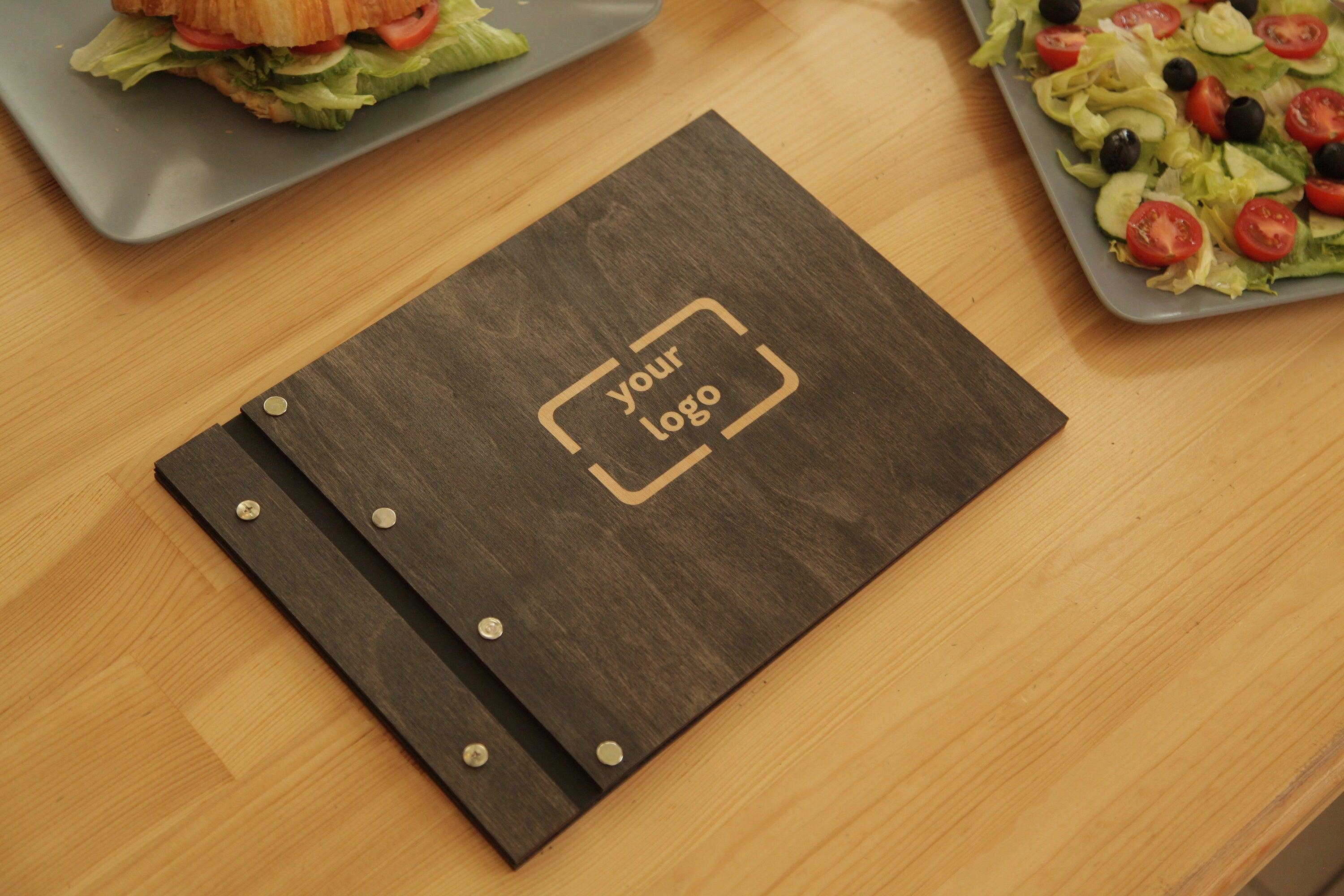
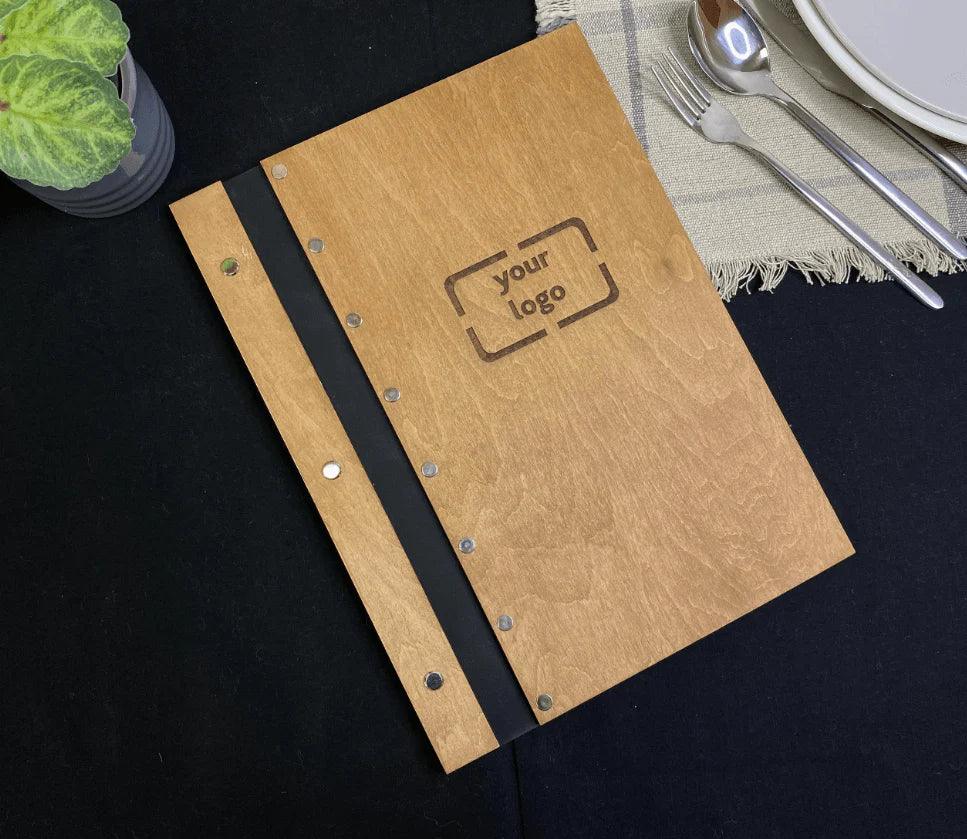
At KyivWorkshop, we create custom menu covers, helping restaurants feel consistent and well thought out. Each piece is crafted to highlight your menu and elevate how guests interact with it from the very first touch.
Explore our menu covers which can support your brand image and turn the menu into part of a memorable dining experience.
FAQs
What is menu pricing?
Menu pricing is the process of assigning prices to dishes in a way that balances costs, demand, and perceived value. It is one of the core decisions that shapes the performance of a restaurant menu. Strong menu pricing ensures each dish contributes to overall profitability and sustainability. It directly affects revenue, positioning, and daily operations.
What are menu pricing strategies?
Menu pricing strategies are structured methods used to determine how dishes are priced and adjusted over time. These include cost-based, value-based, and competitive approaches within restaurant menu pricing strategies. They help businesses align pricing with their concept and customer expectations. Using multiple strategies creates more stable and effective menu pricing.
What are the 7 menu pricing methods?
The seven common methods include cost-based, value-based, competitive, dynamic, bundle, premium, and psychological pricing. These methods support different aspects of restaurant pricing depending on goals and positioning. Restaurants often combine them to respond to changing conditions. This flexibility improves adaptability and revenue potential.
How should I price my menu?
You should price your menu by calculating ingredient, labor, and overhead costs, then aligning them with perceived value. Understanding labor costs and total expenses is essential for accurate pricing. Prices should reflect your concept, location, and audience expectations. A balanced approach supports both competitiveness and profitability.
What is the most common method for pricing menu items?
The most common method is cost based pricing, where prices are set using a target percentage over costs. This approach is widely used in the restaurant industry because it is simple and consistent. It ensures that each dish contributes to covering expenses. However, it is often combined with other strategies for better results.
What does market price mean on a menu?
Market price indicates that the cost of an item changes based on supply and availability. It is often used for products affected by fluctuating food prices, such as seafood. This allows restaurants to maintain margins without constantly updating printed menus. Customers expect variability when this term appears.
How do restaurants justify premium burger pricing?
Restaurants justify higher prices through quality ingredients, branding, and presentation. Unique recipes and sourcing allow them to command higher prices. The experience, including ambiance and service, also adds perceived value. Customers are more willing to pay when the offering feels distinctive.
What's the psychology behind menu pricing strategies?
The psychology behind pricing focuses on how customers perceive value rather than actual cost. Techniques like anchoring and decoy pricing are part of psychological pricing tactics. These methods guide attention and influence decisions subtly. They help increase spending without changing the product itself.
What are the different approaches to menu pricing?
Different approaches include cost-based, value-based, and competitor-based pricing. These fall under broader smart menu pricing strategies used across the industry. Each approach focuses on different factors such as cost, demand, or positioning. Combining them creates a more resilient pricing system.
What is the term that represents the difference between cost and selling price?
The difference between cost and selling price is called profit margins. It measures how much revenue remains after expenses are covered. Maintaining strong margins is essential for long-term sustainability. It is one of the key financial indicators in restaurants.
How do I price menu items to be competitive but still profitable?
You should analyze competitors while maintaining your internal cost structure. The goal is to achieve effective menu pricing without sacrificing margins. Small adjustments can position your business competitively. Continuous monitoring helps maintain balance.
How should I price premium ingredients and specialty items?
Premium ingredients should be priced using premium pricing strategies that reflect perceived value. Customers expect higher prices for premium items when quality is clear. Presentation and storytelling support this perception. This approach allows stronger margins on select dishes.
How to calculate food cost and selling price?
Food cost is calculated by dividing ingredient cost by selling price. This is part of cost based pricing used widely in restaurants. For example, if a dish costs $4 and the target percentage is 30%, the selling price would be around $13. This ensures consistent pricing decisions.
Which menu format allows quick price adjustments?
Digital menus allow the fastest updates compared to printed formats. They are ideal for adjusting set menu prices in response to supply changes. This flexibility is important in dynamic environments. It reduces delays and improves operational control.
What is the ideal food cost percentage?
The ideal food cost percentage typically ranges from 28% to 35%. This range supports a healthy profit margin while remaining competitive. It can vary depending on concept and location. Regular monitoring helps maintain control.
What is the ideal gross profit margin?
Gross profit margin in restaurants usually ranges between 60% and 70%. This ensures coverage of fixed expenses and operational costs. Strong margins provide stability and growth potential. They also help manage unexpected changes.
What is psychological pricing?
Psychological pricing uses perception-based techniques to influence purchasing decisions. It includes charm pricing, anchoring, and bundling. These methods fall under psychological pricing strategies. They help increase revenue without changing product cost.
What are the best strategies to optimize menu pricing?
The best strategies combine data analysis, design, and positioning. Tracking menu performance provides valuable insights for adjustments. Highlighting profitable dishes and refining layout can boost sales. Continuous optimization supports long-term success.








,%20value-...)